A Call or Text From “Us”? Think Twice.
Your security comes first. If you ever feel unsure about a call, hang up and call Michigan United Credit Union directly at 248-814-4000 to verify it’s really us. For safe access online, always use our only official website: www.michiganunitedcu.org
Protect Your Personal Account Information
Slow Down. Verify. Protect Your Account.
To protect your account, we may reach out to confirm certain transactions or address account-related matters.
🚨 Stay alert:
Scammers can make calls look like they’re from Michigan United Credit Union. If someone asks for the information below, it’s a scam. Never share your details.
⚠️ Michigan United Credit Union will never request the following information by phone, text, or email:
- Your debit card PIN
- The CVV (3-digit code) on the back of your card
- Your Online or Mobile Banking password
- Full account numbers
Protecting Your Financial Wellbeing
At Michigan United Credit Union, your safety is our top priority. Scammers are constantly evolving their tactics, and staying informed is your best defense. Here, you’ll find the latest information on common scams, how to recognize red flags, and what to do if you think you’ve been targeted.
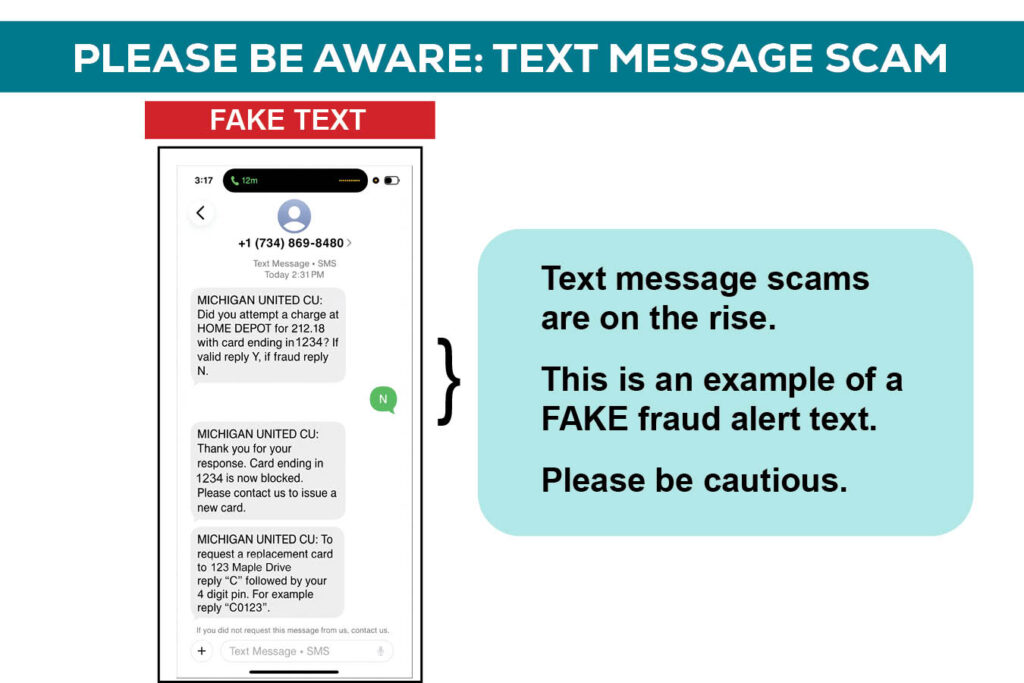
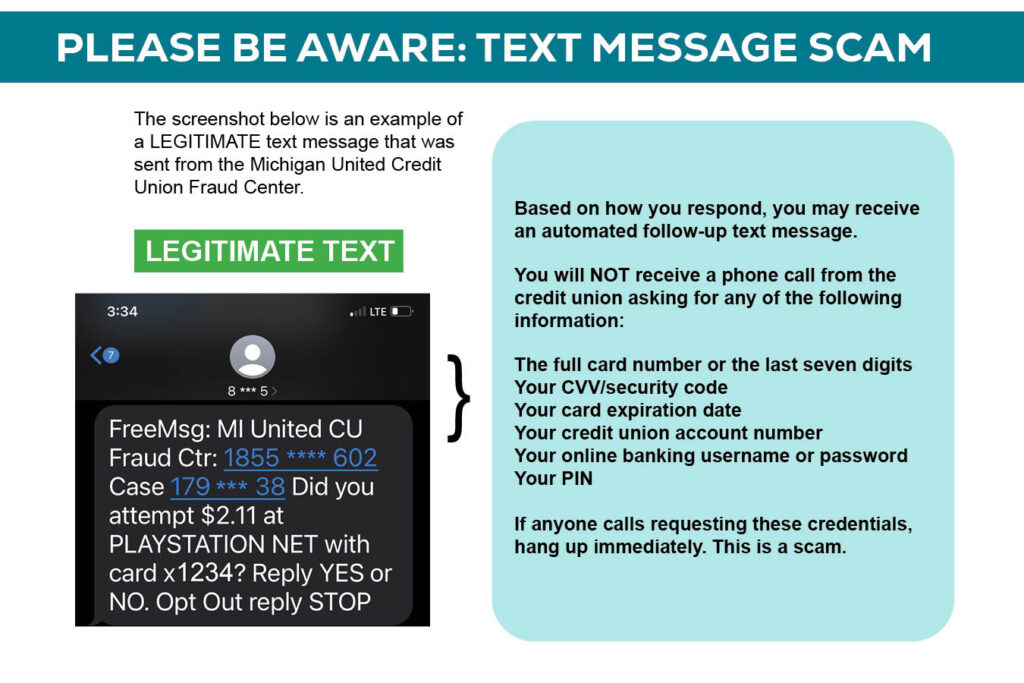
Common Types of Scams
- Phishing Emails & Texts
- Messages that appear to come from trusted sources asking for account info or login credentials.
- Phone Scams (Vishing)
- Calls impersonating financial institutions, law enforcement, or the IRS demanding urgent action.
- Online Purchase Scams
- Fake websites or social media ads that trick you into paying for items that never arrive.
- Romance Scams
- Online relationships used to emotionally manipulate and defraud victims.
- Check Fraud
- Fake check deposits followed by requests to return part of the funds.
Simple Steps to Stay Protected
- ✓ Never share passwords, account numbers or verification codes.
- ✓ Verify callers and messages before taking action.
- ✓ Avoid suspicious links and attachments.
- ✓ Use strong passwords and multi-factor authentication.
- ✓ Monitor your accounts for unusual transactions.
Think You've Been Scammed?
Stop communicating with the suspected scammer and contact Michigan United Credit Union immediately if your accounts or financial information may be at risk. You may also need to secure your accounts, change compromised passwords, and contact the credit bureaus.
You should also report the incident to:
- Federal Trade Commission (FTC): ReportFraud.ftc.gov
- FBI Internet Crime Complaint Center (IC3): IC3.gov for internet-related scams and fraud.
Frequently Asked Questions
How can I tell if a text from my credit union is a scam?
Be cautious of unexpected text messages containing suspicious links, urgent requests, or demands for personal or financial information. Scammers may impersonate Michigan United Credit Union to make their messages appear legitimate. If you're unsure whether a message is authentic, contact us directly at 248-814-4000.
Will Michigan United Credit Union ask for my PIN or password?
No. Michigan United Credit Union will never ask for your debit card PIN, CVV, online banking password, or full account number through a phone call, text message, or email. Never share this information with someone who contacts you unexpectedly.
What should I do if I click on a suspicious link?
Stop interacting with the website immediately. If you entered login credentials, change your password using the official website or mobile app. If you shared financial information, contact Michigan United Credit Union at 248-814-4000 so we can help you determine the next steps.
What should I do if I think I've been scammed?
Stop communicating with the suspected scammer and contact Michigan United Credit Union immediately at 248-814-4000 if your accounts or financial information may be affected. Review your accounts for unauthorized transactions and secure any compromised passwords.
You should also report the incident to:
- Federal Trade Commission (FTC): ReportFraud.ftc.gov
- FBI Internet Crime Complaint Center (IC3): IC3.gov for suspected internet-related crimes.
Reporting suspected fraud can help authorities investigate scams and protect others from becoming victims.
How can I protect my accounts from financial fraud?
Use strong, unique passwords, enable multi-factor authentication whenever available, and regularly review your account activity. Avoid clicking unfamiliar links or sharing sensitive information with unexpected callers or messages. Staying informed about current scams can also help you recognize potential fraud.
Where can I learn more about current scams and fraud prevention?
Visit our Fraud & Scams blog for educational articles, scam warnings, and practical tips to help protect your personal and financial information.