Employment Scams Are on the Rise: How to Spot Fake Job Offers
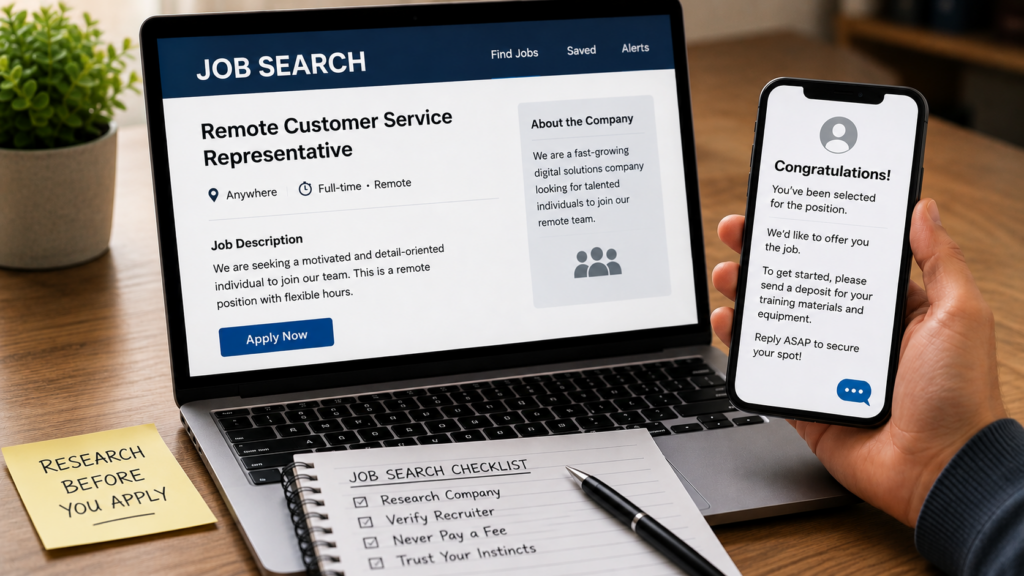
Searching for a new job can be exciting, but it can also make you a target for scammers. Criminals know job seekers may be eager to respond quickly to new opportunities, and they’re taking advantage by posting fake job listings, impersonating recruiters, and advertising work-from-home positions that don’t actually exist.
Employment scams can appear on legitimate job websites, social media, email, and even text messages. Some scammers create fake company websites or pretend to represent well-known businesses to gain your trust. Their goal is often to steal your personal information, banking details, or even convince you to send them money.
How to Spot an Employment Scam
If you’re searching for a job, keep an eye out for these warning signs:
- You’re asked to pay a fee for an application, interview, training, equipment, or certification.
- The job promises high pay for very little work or experience.
- You’re offered the job without a real interview or after only a brief online chat.
- A recruiter contacts you unexpectedly and pressures you to act quickly.
- You’re asked to provide your Social Security number, driver’s license, or banking information before you’ve officially been hired.
- The company sends you a check and asks you to use it to purchase equipment or send money elsewhere.
How to Protect Yourself
Taking a few extra minutes to verify a job opportunity can save you from becoming a victim.
- Never pay money to get a job or attend an interview.
- Research the company and verify that the position is listed on its official website.
- If a recruiter contacts you, confirm they actually work for the company before responding.
- Be cautious of job postings that promise unusually high pay, flexible hours, or easy work from home.
- Limit the amount of personal information you include on public resumes and job profiles.
- If something doesn’t feel right, trust your instincts and walk away.
What to Do If You Think You’ve Been Scammed
If you’ve shared personal or financial information with someone posing as an employer, act quickly. Contact your financial institution, monitor your accounts for suspicious activity, and report the scam to the Federal Trade Commission at ReportFraud.ftc.gov.
Michigan United Credit Union Is Here to Help
Scammers are constantly changing their tactics, but staying informed is one of the best ways to protect yourself. Whether you’re starting your first job, changing careers, or looking for extra income, taking time to verify a job opportunity can help keep your identity and finances safe.
If you believe your account information has been compromised, contact us as soon as possible. Our team is here to help you protect your accounts and answer any questions you may have.